6 Situations in Which You Must Obtain a Chinese Visa in Advance
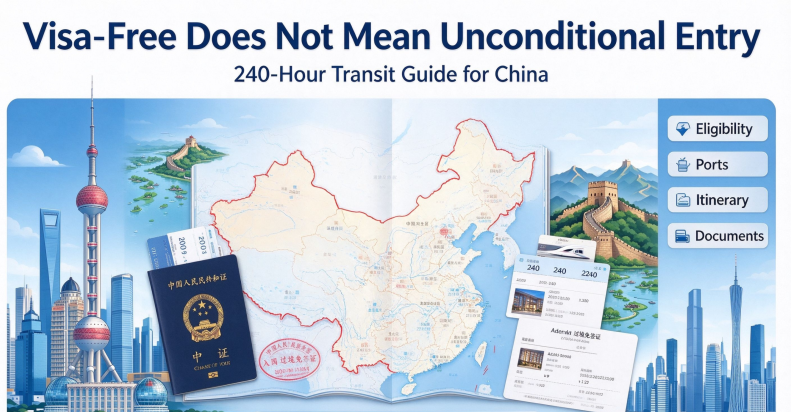
China continues to expand visa facilitation measures — including unilateral visa exemptions, mutual visa exemption agreements, and the 240-hour (10-day) visa-free transit policy — which have significantly lowered entry barriers for eligible foreign travelers.
However, visa-free entry does not equal unrestricted entry. Misunderstanding the rules can result in denied boarding by airlines or refusal of entry by Chinese immigration authorities.
Below are six common scenarios where travelers must apply for the appropriate Chinese visa in advance, even if their nationality is covered by a visa exemption or visa-free transit scheme.
1. Your Travel Purpose Falls Outside Permitted Visa-Free Activities
China’s visa exemption and visa-free transit policies generally cover short-term activities: tourism, business meetings, family visits, and transit.
The following activities require a dedicated visa or prior official authorization:
- Employment / paid work
Foreign nationals engaging in paid employment, commercial performances, or labor services in China must obtain a Z visa (work visa) unless a specific exemption applies. This rule applies regardless of whether the employer is a China-based company. - Study / education programs
Those planning to study in China need an X1 visa for long-term study or an X2 visa for short-term study, based on the program duration and rules. - Journalism & news reporting
Foreign journalists traveling for reporting or news-gathering require a J1 or J2 visa, depending on the nature and length of their assignment. - Settlement / long-term residence
Travelers intending to settle in China or stay beyond the visa-free period must apply for the corresponding visa or residence permit.
Important: A visa exemption for tourism or business visits does not automatically authorize employment, formal study, journalism, or long-term residence. Always verify rules for your specific activity before departure.
2. Your Itinerary Violates the A–B–C Transit Rule
This section applies to visa-free transit policies; it does not necessarily apply to all unilateral/mutual visa exemption schemes.
The core principle of China’s visa-free transit policy is:
Country/Region A → Mainland China (B) → Country/Region C
A and C must be different destinations for the journey to qualify as “transit”.
Scenarios That Require a Visa
- Round-trip itineraries returning to the origin
Examples:- San Francisco → Shanghai → San Francisco
- London → Beijing → London
- Unconfirmed onward travel arrangements
Standby tickets, open tickets without a fixed departure date, or verbal-only onward plans do not meet the policy requirements. Travelers must hold a confirmed onward ticket with a clear departure date and reserved seat.
How to Restructure Your Itinerary
If you originally planned a round trip, adding a third country/region to your outbound or return leg may restore eligibility:
Example: San Francisco → Shanghai → Hong Kong → San Francisco
This route may satisfy the A ≠ C principle, as the traveler proceeds to a different region before returning to the origin country.
Note: Adding a stop does not guarantee eligibility. Your full itinerary, ports of entry/exit, ticket documentation and other conditions must still comply with official rules. Always confirm with your airline and Chinese immigration authorities before booking.
3. Your Stay or Travel Scope Exceeds Permitted Limits
Visa exemption policies have clear legal boundaries on both duration and geographic coverage. Visa-free status does not grant permission to travel anywhere in China for any length of time.
Scenarios That Require a Visa
- Stay longer than the maximum permitted period
Maximum stays vary by policy: unilateral visa exemptions may allow 15 or 30 days, while the 240-hour transit policy allows up to 10 days. If your trip exceeds the applicable limit, you must apply for an appropriate visa in advance. Do not assume you can extend your stay after arrival. - Travel beyond authorized areas
The 240-hour visa-free transit policy covers designated zones across 24 provincial-level regions — but not every city or region in mainland China is included. Destinations with separate entry restrictions (e.g. Tibet, certain border areas) may require additional permits. A visa exemption does not automatically waive other regional entry requirements.
Before departure: Confirm both the permitted travel area and any additional regional entry rules for your destinations.
4. Your Travel Documents Fail Eligibility Checks
Even if your nationality qualifies for visa-free entry, your passport and supporting documents must meet mandatory standards.
Issues That Disqualify Visa-Free Entry
- Insufficient passport validity
Validity requirements vary by policy: many visa-free transit schemes require at least 3 months of remaining passport validity; other arrangements may set a 6-month threshold. If your passport is near expiry, check the rules and consider renewing it before travel. - Non-ordinary passport / invalid travel documents
Most visa exemption policies apply exclusively to ordinary passports. Emergency travel documents, temporary passports, and certain special travel documents may not qualify. Damaged, altered or invalid passports may also cause issues at check-in or immigration.
Practical tip: Confirm your passport type, validity and condition before purchasing non-refundable tickets.
5. Your Entry Port Is Not Designated for Visa-Free Transit
This section applies specifically to visa-free transit policies.
Temporary entry permission under the transit policy can only be issued at officially designated ports. Not all airports, railway stations, ferry terminals or land border crossings qualify.
Scenario That Requires a Visa
China’s visa-free transit policy covers 65 designated ports, including major hubs like Shanghai Pudong, Shanghai Hongqiao, Beijing Capital, Beijing Daxing and Guangzhou Baiyun.
If you enter via a smaller land border crossing, local passenger port, or regional airport not on the designated list, you cannot obtain temporary entry permission on arrival. You must apply for a visa in advance at a Chinese embassy, consulate or visa application center.
Pre-Booking Verification Steps
- Confirm your intended entry port appears on the latest official list.
- Verify the port supports the specific visa-free transit scheme you plan to use.
- Confirm your departure port also qualifies.
- If your port does not qualify, apply for the appropriate visa before travel.
Do not assume all major international airports or transport hubs automatically qualify.
6. You Have Prior Immigration Records or Entry Restrictions
Travelers with certain immigration or legal histories may face additional screening. Visa-free entry is not guaranteed, even for eligible nationalities.
Scenarios That May Affect Entry
- Previous overstays or immigration violations
Travelers with a history of visa overstay, illegal work, or deportation from China or other countries may face enhanced checks. Chinese immigration authorities may refuse entry or decline to issue temporary entry permission depending on the circumstances. - Active entry restrictions
Individuals subject to entry bans for legal, public security, public health or other regulatory reasons are ineligible for entry. - Previous Chinese visa refusals
A past visa refusal does not permanently bar visa-free entry, but if the underlying issue remains unresolved, it may affect your entry assessment.
Recommended action: If you have relevant immigration history or suspect you may be subject to restrictions, contact the nearest Chinese embassy or consulate before departure. Applying for a visa does not guarantee approval, but advance clarification can help avoid unexpected issues at the airport.
📋 Pre-Travel Checklist: Do You Qualify for Visa-Free Entry?
| Check Category | Visa-Free Entry / Transit May Be Allowed | Visa / Additional Authorization Required |
|---|---|---|
| Purpose of travel | Tourism, eligible business visits, family visits, standard transit | Employment, formal study programs, journalism, long-term residence |
| Itinerary structure | A → B (mainland China) → C, with A ≠ C (for transit policies) | A → B → A (round-trip, fails the transit test) |
| Length of stay | Within the official visa-free limit (e.g. ≤ 240 hours for transit) | Planned stay exceeds the maximum allowed period |
| Onward travel | Confirmed ticket with fixed date and reserved seat | No valid onward ticket, or only standby / open tickets |
| Passport status | Eligible passport type, valid for the required period, undamaged | Ineligible passport type, insufficient validity, damaged / altered document |
| Entry port | A designated port authorized for the applicable policy | Entry via a port not designated for visa-free transit |
| Travel area | All destinations fall within permitted zones | Itinerary includes areas requiring separate permits |
| Immigration history | No active entry restrictions or relevant violations | Past immigration violations or active entry restrictions |
This table is a general screening tool, not a definitive legal determination. Requirements vary across different visa exemption and transit policies.
Final Entry Tips
If you have confirmed your itinerary qualifies for visa-free entry or transit, carry printed copies of your accommodation bookings and onward travel itinerary. These documents can help you demonstrate your travel plans if requested by airline staff or immigration officers.
Before departure, ensure you have:
- Confirmed your eligibility under the relevant visa exemption or transit policy
- Verified the permitted length of stay and travel area
- Confirmed both your entry and departure ports qualify
- Prepared your confirmed onward ticket and supporting travel documents
- Checked whether your planned activities require a separate visa or authorization
Key Takeaway
Visa-free does not mean unconditional entry. Reviewing requirements in advance is the best way to reduce the risk of denied boarding, delays, or refusal of entry.
For the latest official requirements, consult the website of China’s National Immigration Administration and the relevant Chinese embassy or consulate.